

Skin Tightening Decision Guide: Matching Your Concern to the Right Technology in the Roaring Fork Valley
Not every skin tightening treatment works the same way, and not every concern calls for the same device. Residents across Glenwood Springs, Aspen, Carbondale, and the broader Roaring Fork Valley now have access to multiple non-surgical technologies that target different layers of skin using different forms of energy. The challenge is not finding a treatment. It is finding the right one for your specific anatomy and goals.
At Contour Body Aesthetics, we help clients navigate this decision every day at our Glenwood Springs location. This guide organizes the comparison not by device name, but by the concern you actually see in the mirror, so you can identify which category of technology deserves your attention first.
Why the Energy Type Matters More Than the Brand Name
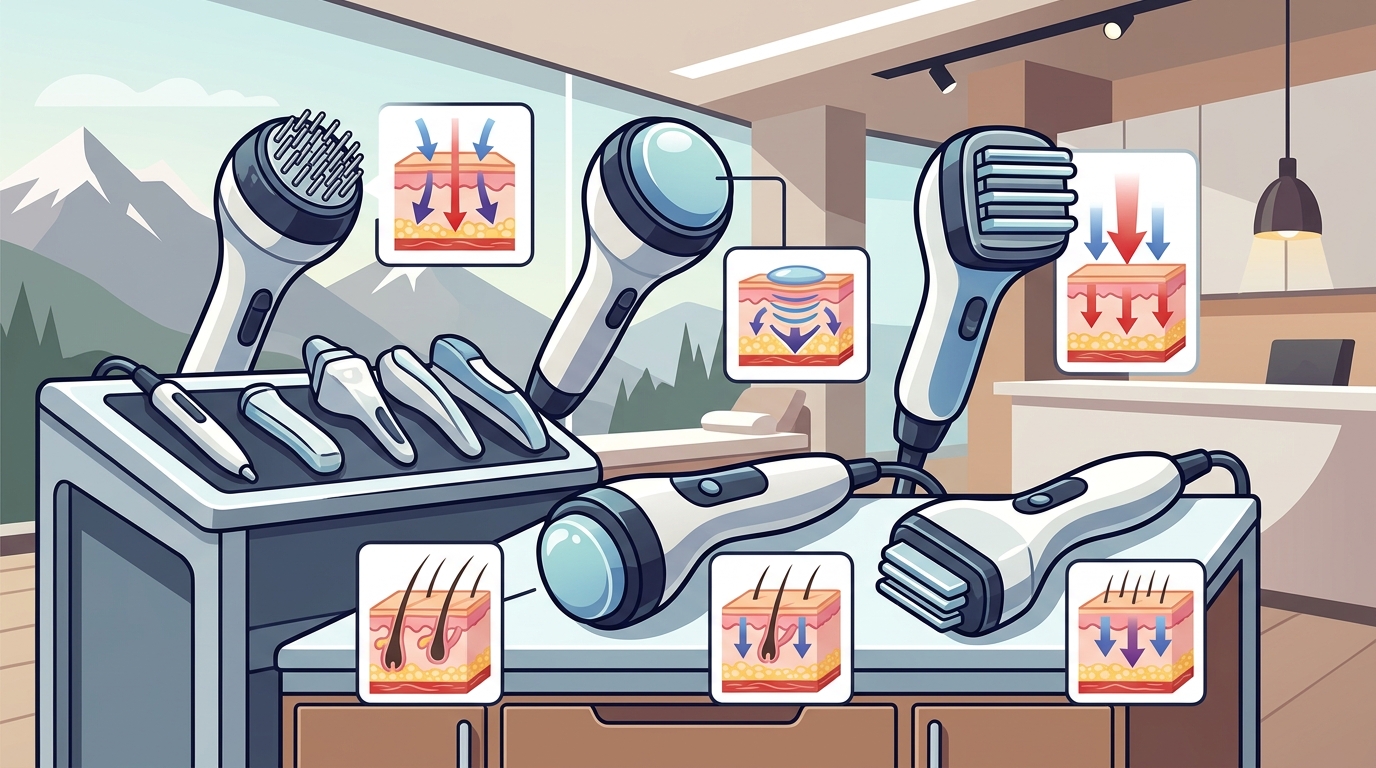
Non-surgical skin tightening is a term that covers three fundamentally different energy categories: surface radiofrequency (RF), RF microneedling, and focused ultrasound. Each one reaches a different depth, triggers a different biological response, and suits a different stage of laxity.
Radiofrequency skin tightening is a method that uses electromagnetic energy to heat the dermis, typically reaching depths of 0.5 to 2 mm with surface devices. This controlled heating raises tissue temperature to roughly 40 to 45 degrees Celsius, which causes existing collagen fibers to contract and stimulates new collagen production over the following months.
RF microneedling is a technique that combines tiny needles with radiofrequency energy delivered directly into the dermis at adjustable depths, generally between 0.5 and 4 mm. The mechanical micro-injuries plus thermal energy create a stronger wound-healing response than surface RF alone.
Focused ultrasound skin tightening is a technology that uses sound waves to bypass the skin surface entirely and deliver energy to deeper structural layers, reaching up to 4.5 mm or more, including the SMAS layer that surgeons address during a facelift.
Concern 1: Jowls and Lower Face Sagging
Jowling occurs when the deeper structural support of the face weakens and tissue descends below the jawline. Because the issue is rooted in deeper layers, treatments that reach the SMAS or sub-dermal tissue tend to produce the most visible improvement.
Focused ultrasound devices target the SMAS layer at 3 to 4.5 mm depth, creating thermal coagulation points that trigger a lifting effect from below. For clients with moderate jowling who want to avoid surgery, this depth of penetration matters.
Needle-free RF options like XERF offer a gentler approach that heats the dermis without needles or significant downtime. XERF is well suited for mild to moderate laxity along the jawline, especially for clients who prefer gradual, cumulative tightening across a series of sessions.
RF microneedling occupies a middle ground, delivering energy deeper than surface RF but typically not as deep as focused ultrasound. For jowls specifically, the advantage of RF microneedling treatments like Potenza is the simultaneous improvement in skin texture alongside moderate tightening.
Concern 2: Loose Neck Skin and Banding
The neck is one of the most common areas where age-related laxity becomes visible early. Thin skin, sun exposure at altitude, and the natural effects of gravity combine to produce crepiness and horizontal lines that many Roaring Fork Valley residents want to address without a surgical neck lift.
Surface RF treatments are a practical starting point for mild neck laxity. They firm the superficial dermis with virtually no recovery time. XERF specifically targets the neck and jawline, making it one of the most accessible entry points for clients who have never tried a skin tightening treatment.
For more pronounced neck laxity, RF microneedling delivers energy at controlled depths through the thin neck skin, stimulating collagen remodeling with a few days of mild redness as the primary downtime. Focused ultrasound can also address neck skin by targeting the platysma muscle layer, though comfort levels vary depending on the device and individual sensitivity.
Concern 3: Fine Lines, Texture, and Crepey Skin
Crepey skin is characterized by thin, wrinkled texture that resembles crepe paper, often appearing on the cheeks, under-eyes, decolletage, and arms. This concern lives primarily in the upper dermis, making it a target for technologies that remodel collagen at shallower depths.
RF microneedling is generally considered the strongest performer for texture-related concerns because it creates controlled micro-channels that stimulate both collagen and elastin renewal throughout the dermis. Peer-reviewed research confirms that energy-based devices producing neocollagenesis yield measurable improvements over follow-up periods of three to twelve months.
Surface RF and XERF also improve skin quality and firmness without the micro-injury component, which can be preferable for clients with very thin or sensitive skin who want to avoid any visible recovery period. The tradeoff is typically a more gradual timeline for visible results.
Concern 4: Brow Heaviness and Mid-Face Descent
As facial volume shifts downward with age, the brow can feel heavy and the mid-face loses its youthful convexity. Traditional approaches to this concern involved injectables, surgery, or both. Newer device-based options now offer alternatives.
Emface takes a different approach entirely, combining synchronized RF energy with high-intensity facial electrical stimulation (HIFES) to simultaneously tighten skin and strengthen the underlying facial muscles. This muscle-building component is what distinguishes Emface from every other device in this comparison, as it addresses the muscular foundation rather than skin alone.
Focused ultrasound has also demonstrated measurable brow lifting effects. Studies have documented vertical brow displacement of approximately 0.5 to 1.7 mm at three months post-treatment, which translates to a subtle but visible opening of the eye area.
Concern 5: Post-Weight-Loss Skin Laxity on the Body
Significant weight loss, whether from lifestyle changes, GLP-1 medications, or bariatric procedures, often leaves behind loose skin on the abdomen, arms, and thighs. Body skin behaves differently than facial skin, and not every facial tightening device translates well to larger body surfaces.
RF-based body contouring platforms can treat larger areas more efficiently. For clients pursuing both body contouring and skin tightening simultaneously, combination protocols that pair fat reduction with RF tightening often yield the most comprehensive transformation.
RF microneedling can also be applied to body areas, though treatment times increase with the size of the area. For mild to moderate body skin laxity, a series of treatments spaced four to six weeks apart is typical.