

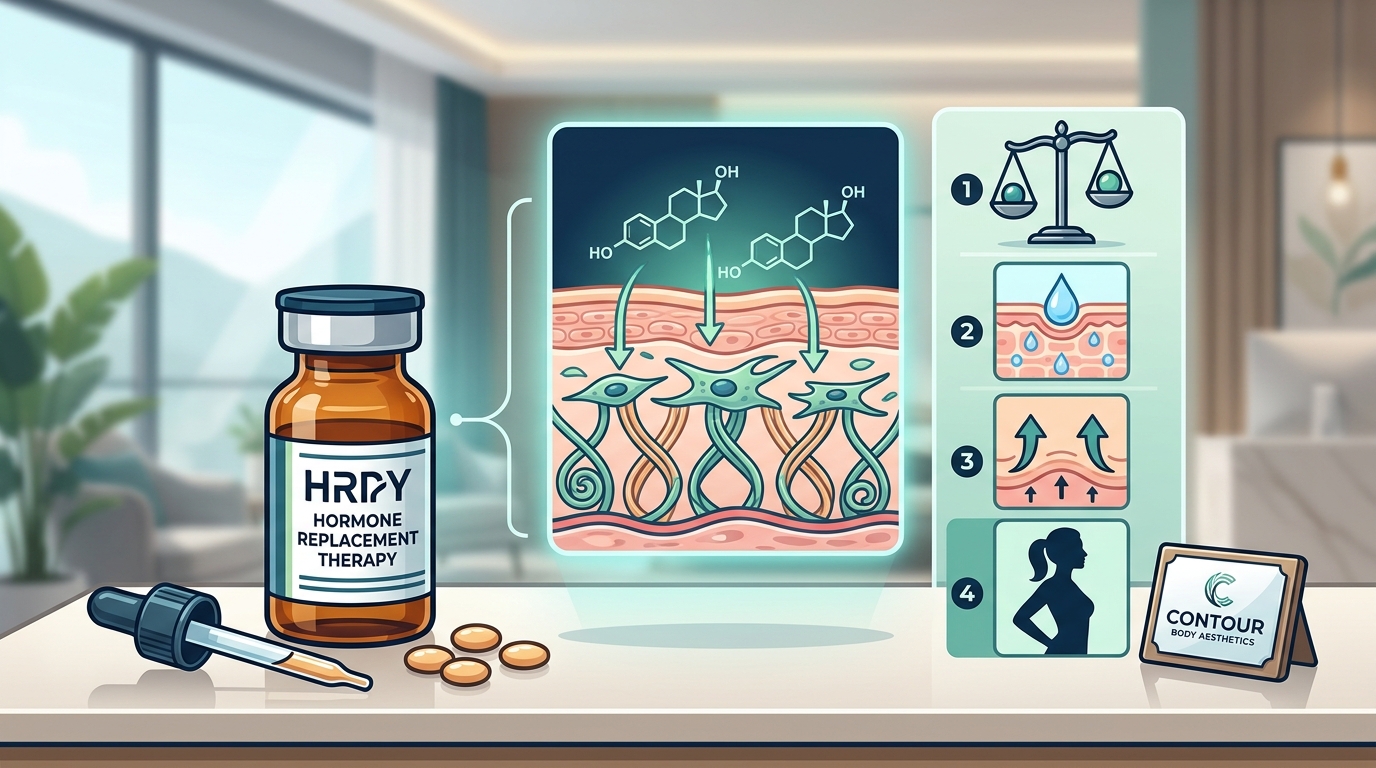
Hormone replacement therapy (HRT) helps restore estrogen levels, which supports collagen production and skin hydration during menopause. By addressing the hormonal shifts that cause thinning and dryness, HRT can improve skin elasticity and reduce the appearance of laxity. At Contour Body Aesthetics in Glenwood Springs, we view HRT as a foundational health strategy that works alongside non-surgical aesthetic treatments to support structural rejuvenation.
The Role of Estrogen in Skin Structure
Estrogen is a hormone that plays a critical role in maintaining the structural integrity of the skin. It stimulates fibroblasts to produce collagen, elastin, and hyaluronic acid, which are essential for firmness and moisture. When estrogen levels drop significantly during menopause, the skin loses its ability to retain water and maintain its supportive matrix.
Research indicates that women can lose up to 30% of their collagen in the first five years after menopause. This rapid decline leads to visible changes such as thinning, dryness, and a loss of volume. Understanding this biological mechanism is the first step in creating a comprehensive plan for skin health.
Collagen and Skin Thickness
Collagen is the primary protein that provides skin with its strength and structure. As estrogen levels fall, the rate of collagen synthesis slows down while the rate of collagen breakdown increases. This imbalance results in skin that feels thinner and less resilient to environmental stressors.
How Hormone Therapy Affects Skin Hydration
Many patients report that their skin feels softer and less dry after starting HRT. This improved hydration can make the skin appear more plump and youthful. However, hydration alone does not address deeper structural issues like sagging or deep wrinkles.
The Skin Barrier Function
The skin barrier is the outermost layer that protects against moisture loss and external irritants. Estrogen supports the production of lipids that strengthen this barrier. A compromised barrier can lead to sensitivity and chronic dryness, which are common complaints during the menopausal transition.
Limitations of HRT for Structural Laxity
While HRT is effective for improving skin quality and hydration, it is not a solution for significant structural laxity. It does not rebuild the deep connective tissue framework that supports the face and body. For many women, the loss of muscle tone and the stretching of skin due to gravity and aging continue despite stable hormone levels.
This is where non-surgical treatments become essential. At Contour Body Aesthetics, we often see clients who have optimized their hormonal health but still desire a more lifted and defined appearance. We combine the benefits of HRT with advanced technologies designed to stimulate collagen remodeling and muscle tone.
Addressing Jowls and Neck Laxity
Jowls and neck laxity are often caused by the weakening of the platysma muscle and the loss of subcutaneous support. HRT may help the skin look healthier, but it cannot tighten these areas. Treatments like radiofrequency skin tightening are designed to address these specific structural concerns by heating the deeper layers of the skin to promote new collagen growth. according to Endometriosis Glossary Endometriosis
Integrating HRT with Non-Surgical Aesthetics
The most effective approach to managing menopausal skin changes is a multi-modal strategy. HRT provides the hormonal foundation, while non-surgical treatments address the structural and textural changes. This combination allows for a more comprehensive rejuvenation plan that targets both the internal and external factors affecting skin appearance.
For example, a client might use HRT to improve overall skin health and hydration, while also undergoing radiofrequency treatments to tighten loose skin on the neck. This layered approach ensures that all aspects of skin aging are addressed. Our team in Glenwood Springs works with clients to create personalized plans that integrate these strategies safely and effectively.
Collagen Remodeling Technologies
Collagen remodeling is a process where the skin produces new collagen fibers to replace old, damaged ones. Non-surgical technologies like radiofrequency and high-intensity focused ultrasound (HIFU) are designed to trigger this process. By stimulating the skin's natural healing response, these treatments help restore firmness and definition.
Key Takeaways
- Estrogen is a hormone that supports collagen production and skin hydration, both of which decline during menopause.
- Hormone therapy is a medical treatment that can improve skin texture, moisture, and overall health by restoring hormone levels.
- HRT does not reverse significant structural laxity, such as jowls or neck sagging, which require targeted non-surgical treatments.
- A multi-modal approach combining HRT with collagen-stimulating technologies offers the most comprehensive results.
- Consulting with a specialist in Glenwood Springs can help you create a personalized plan that addresses both hormonal and structural skin changes.
Frequently Asked Questions
Does hormone therapy stop skin aging?
No, hormone therapy does not stop skin aging. It helps mitigate some of the effects of estrogen loss, such as dryness and thinning, but the natural aging process continues. Non-surgical treatments are often needed to address structural changes like sagging and wrinkles.
Can HRT improve the appearance of jowls?
HRT may improve the overall quality and hydration of the skin, which can make jowls appear less pronounced. However, it does not tighten the skin or rebuild the muscle support that causes jowls. For significant jowl correction, non-surgical lifting treatments are typically recommended.
Is HRT safe for everyone going through menopause?
HRT is not suitable for everyone. Factors such as personal medical history, family history, and current health status must be evaluated by a healthcare provider. It is important to discuss the risks and benefits with your doctor before starting any hormone therapy.
How long does it take to see skin changes with HRT?
Many women notice improvements in skin hydration and texture within a few months of starting HRT. However, the full benefits may take longer to manifest. Consistency is key, and results can vary from person to person.
Can I combine HRT with non-surgical skin tightening treatments?
Yes, combining HRT with non-surgical treatments is a common and effective strategy. HRT supports the skin's internal health, while treatments like radiofrequency address external structural concerns. This combination can lead to more comprehensive and lasting results.
Next Steps for Your Skin Health
Understanding the role of hormone therapy in menopausal skin changes is a crucial step in your journey toward structural rejuvenation. At Contour Body Aesthetics, we are committed to helping you navigate this transition with confidence. Our team in Glenwood Springs offers personalized consultations to assess your unique needs and develop a plan that integrates hormonal health with advanced non-surgical treatments. To begin your transformation, book a consultation with us today.