

Non-surgical skin tightening treatments in the Roaring Fork Valley use energy-based technologies to stimulate collagen and remodel tissue without incisions. At Contour Body Aesthetics in Glenwood Springs, we focus on structural rejuvenation using advanced modalities like radiofrequency and ultrasound. This guide compares the core mechanisms, downtime, and ideal candidates for each technology to help you choose the right path for your goals.
RF Microneedling
Radiofrequency microneedling is a hybrid treatment that combines the mechanical action of microneedling with the thermal energy of radiofrequency. This dual approach allows energy to be delivered deep into the dermis while minimizing surface damage. The needles create micro-channels that enhance the penetration of the RF energy, targeting the deeper layers where collagen production occurs. For additional details, review the .
How It Works
Ideal Candidates
This treatment is often recommended for patients with moderate skin laxity, acne scarring, or textural irregularities. It is particularly effective for the face, neck, and body areas where surface texture is a primary concern. Because it works from the inside out, it is suitable for a wide range of skin types. For additional details, review the Customer Experience.
Monopolar RF Treatments
Monopolar radiofrequency is a non-invasive energy-based treatment that uses a single electrode to deliver heat to the deeper layers of the skin. Unlike bipolar RF, which uses two electrodes on the skin surface, monopolar RF allows energy to travel through the tissue to a grounding pad. This enables deeper penetration and more significant volumetric heating. For additional details, review the Frequently Asked Questions.
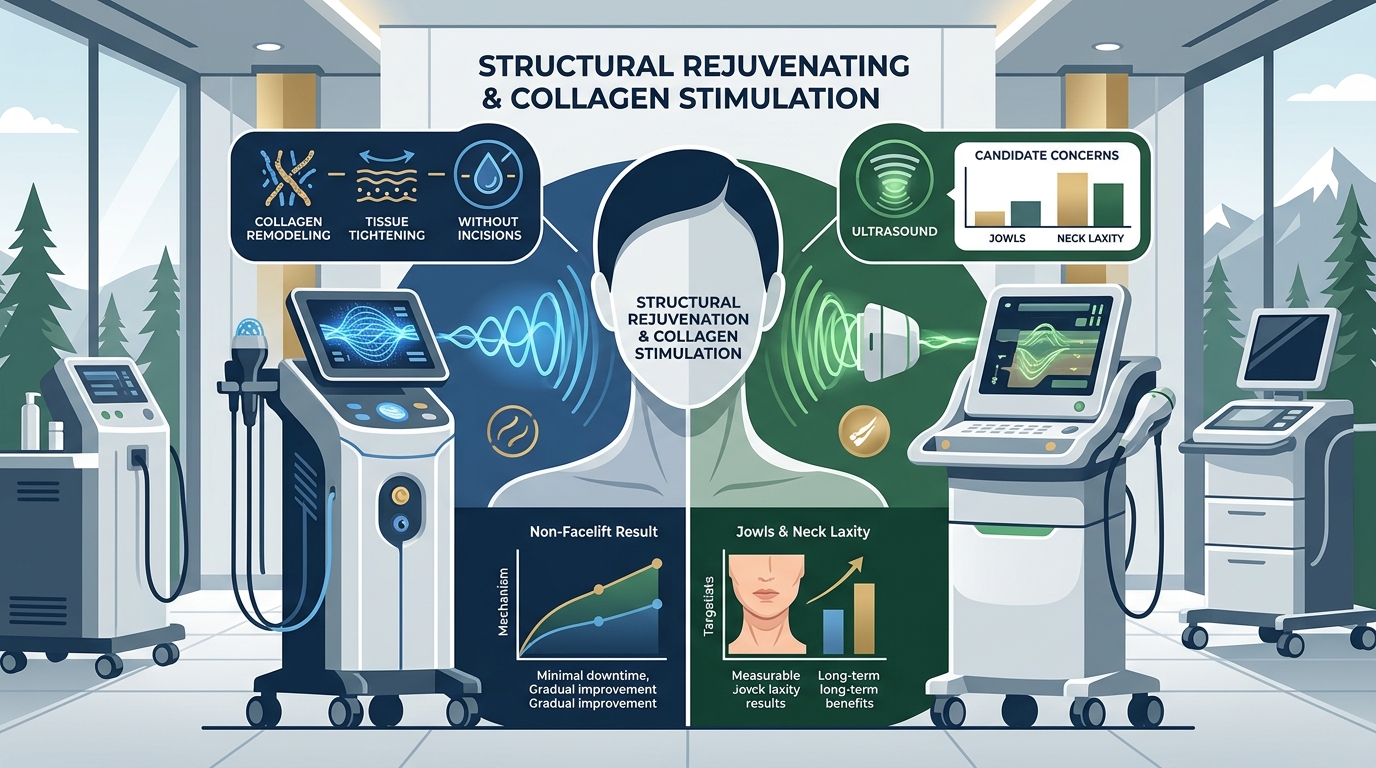
Deep Tissue Heating
The technology heats the dermis and subcutaneous fat to temperatures that stimulate collagen contraction and remodeling. This deep heating effect is what distinguishes monopolar RF from superficial treatments. It is designed to address structural laxity rather than just surface texture.
Structural Rejuvenation
At Contour Body Aesthetics, we utilize monopolar RF as a cornerstone of our structural rejuvenation protocols. It is highly effective for tightening loose skin on the face, neck, and body. The treatment helps restore a more defined jawline and neck contour without the need for surgery.
Ultrasound Skin Tightening
Ultrasound skin tightening is a non-invasive procedure that uses focused ultrasound energy to target the deep structural layers of the face and body. The energy is delivered to precise depths, bypassing the surface skin to reach the SMAS layer, which is the same layer targeted in a surgical facelift.
Deep Structural Lifting
By heating the deep tissue, ultrasound treatments create micro-thermal coagulation points. These points trigger a healing response that leads to new collagen formation and tissue tightening. The result is a subtle but noticeable lift in the brow, jawline, and neck.
Comparison to RF
While RF works primarily on the dermis, ultrasound reaches deeper into the structural layers. This makes it a powerful tool for addressing significant sagging. Many patients combine ultrasound with RF treatments for comprehensive results, targeting both deep structure and surface texture.
Downtime and Invasiveness
One of the primary advantages of non-surgical skin tightening is the minimal downtime associated with these procedures. Most treatments are considered lunchtime procedures, allowing patients to return to their daily activities immediately or after a short break.
Recovery Expectations
RF microneedling may cause mild redness and swelling for 24 to 48 hours. Monopolar RF and ultrasound treatments typically result in less visible side effects, with any redness fading within a few hours. There is no need for bandages or extensive aftercare, making these treatments ideal for busy professionals.
Long-Term Commitment
While the immediate downtime is low, the results of non-surgical tightening are gradual. Collagen remodeling takes time, and patients should expect to see improvements over several months. Multiple sessions are often recommended to achieve optimal results, and maintenance treatments help sustain the effects over time.
Collagen Stimulation Mechanisms
Collagen stimulation is the biological mechanism behind all effective skin tightening treatments. As we age, our natural collagen production declines, leading to skin laxity and sagging. Energy-based treatments work by creating controlled thermal injury, which signals the body to produce new collagen.
The Remodeling Process
When the skin is heated, existing collagen fibers contract immediately, providing an initial tightening effect. Over the following weeks and months, fibroblasts are activated to produce new collagen and elastin. This remodeling process continues for up to six months, resulting in progressive improvement in skin quality and firmness.
Why It Matters
Treatment Comparison
The following table summarizes the key differences between the primary non-surgical skin tightening technologies available at Contour Body Aesthetics.
| Treatment | Primary Mechanism | Depth of Penetration | Ideal For | Downtime |
|---|---|---|---|---|
| RF Microneedling | Hybrid thermal and mechanical | Dermis | Texture, scarring, mild laxity | 24-48 hours |
| Monopolar RF | Deep thermal heating | Dermis and subcutaneous | Structural laxity, neck, face | Minimal |
| Ultrasound | Focused deep heating | SMAS layer | Deep sagging, brow, jawline | Minimal |
Key Takeaways
- Non-surgical skin tightening uses energy-based technologies to stimulate collagen without incisions.
- RF microneedling combines surface texture improvement with deep collagen stimulation.
- Monopolar RF delivers deep heat to address structural laxity in the face and body.
- Ultrasound targets the deep SMAS layer for a lifting effect similar to surgery.
- Downtime is minimal for all three treatments, allowing for quick return to daily activities.
- Results are gradual, with collagen remodeling continuing for up to six months.
- Combining treatments can address both surface texture and deep structural sagging.
- Consultation is essential to determine the best treatment plan for your specific goals.
Frequently Asked Questions
What is the difference between RF and ultrasound skin tightening?
RF works primarily on the dermis to improve texture and mild laxity, while ultrasound targets the deeper SMAS layer for a more significant lifting effect. Both stimulate collagen, but they reach different depths of tissue.
How many treatments are needed for skin tightening?
Most patients require a series of treatments to achieve optimal results. The exact number depends on the severity of laxity and the specific technology used. Your provider will recommend a personalized plan during your consultation.
Is non-surgical skin tightening safe for all skin types?
Generally, yes, but safety depends on the specific technology and the patient's skin condition. A thorough consultation is necessary to assess suitability and minimize the risk of side effects.
How long do the results of non-surgical skin tightening last?
Results are not permanent, as aging continues. However, maintenance treatments can help sustain the effects for several years. The longevity of results depends on individual factors and adherence to a maintenance schedule.
Can I combine RF microneedling with ultrasound?
Yes, combining these treatments can be highly effective. RF addresses surface texture and dermal laxity, while ultrasound targets deep structural sagging. Together, they provide a comprehensive approach to skin rejuvenation.
What should I expect during a consultation at Contour Body Aesthetics?
During your consultation, we will assess your skin condition, discuss your goals, and recommend a personalized treatment plan. We will explain the mechanisms of each treatment and help you set realistic expectations for your results.